Skills You Must Learn Alongside Engineering to Succeed in 2026
Published: April 12, 2026 · 10 min read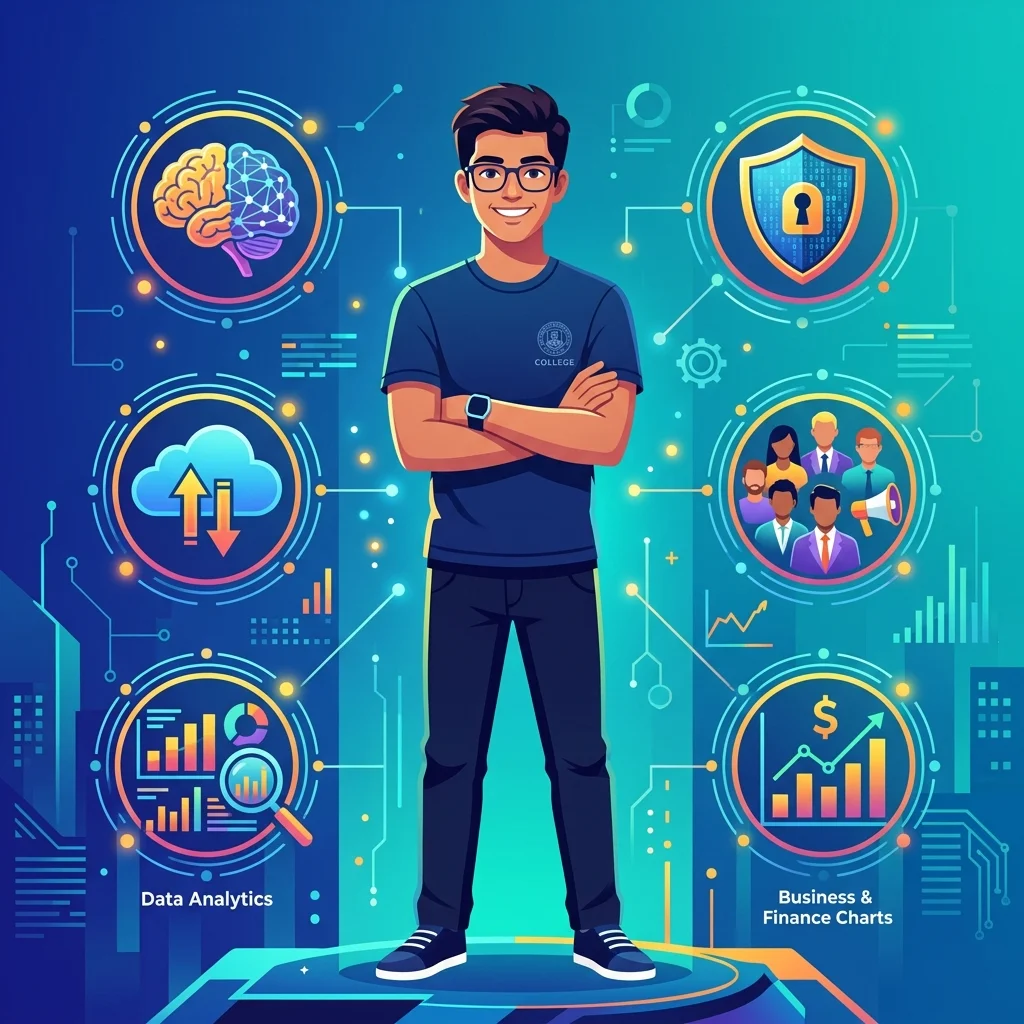
The professional landscape in India is changing at a breakneck pace. By 2026, holding a traditional degree will no longer guarantee a stable career path. To thrive in this competitive environment, you must adopt a proactive mindset toward your professional development.
Relying solely on your core academic training is a risky strategy in a globalized economy. You need to identify the right Skills To Learn Alongside Engineering to remain ahead of technological disruptions. Diversifying your expertise is the most effective way to ensure long-term growth and job security. Embracing continuous improvement will help you stand out to top employers across the country.
Key Takeaways
- Traditional degrees are becoming insufficient for long-term career success in India.
- Technological disruption requires a proactive approach to professional growth.
- Diversifying your expertise is essential for staying relevant in a global market.
- Continuous improvement helps you remain competitive against evolving industry standards.
- Strategic self-development is the key to unlocking better opportunities by 2026.
The Evolving Landscape of Engineering Careers in India
If you are an engineering student in India, you have likely noticed that the job market is changing faster than ever before. The rise of automation and digital transformation is rapidly redefining what it means to be a professional in this field. Today, companies are looking for more than just a degree; they are hunting for practical, real-world problem solvers.
The days of relying solely on theoretical knowledge are fading away. Modern employers now prioritize the ability to apply technical concepts to solve complex business challenges. This shift makes it vital for students to focus on acquiring the right skills for engineering students that bridge the gap between the classroom and the office.
Engineering careers in India are becoming increasingly interdisciplinary. You might find yourself working on a project that requires knowledge of software, hardware, and even basic financial management. Recognizing this trend early is the best way to prepare for a successful career trajectory.
| Focus Area | Traditional Expectation | Modern Industry Requirement |
|---|---|---|
| Technical Knowledge | Theoretical Mastery | Practical Application |
| Skill Set | Specialized/Siloed | Interdisciplinary/Versatile |
| Problem Solving | Standardized Methods | Creative/Adaptive Thinking |
| Career Growth | Linear Progression | Continuous Learning |
Ultimately, the path to success involves staying ahead of these industry shifts. By proactively developing essential skills for engineering students, you position yourself as a valuable asset in a competitive market.
Essential Skills To Learn Alongside Engineering for Future Readiness
To thrive in the rapidly changing digital landscape, engineers must expand their expertise beyond core disciplines. These Skills To Learn Alongside Engineering serve as the foundation for working on high-impact projects in sectors like fintech, healthcare, and manufacturing.
Mastering Artificial Intelligence and Machine Learning Literacy
You do not need to be a data scientist to benefit from AI literacy. Understanding how to implement machine learning models allows you to automate complex tasks and improve system efficiency. Practical AI knowledge helps you identify where automation can solve real-world problems in your specific field.
Data Analytics and Visualization Proficiency
Modern engineering is increasingly data-driven. The ability to interpret large datasets and present findings through clear visualizations is one of the most important skills for engineers today. When you can turn raw data into actionable insights, you become a vital asset to any project team.
Cloud Computing and Infrastructure Management
Most modern applications now live in the cloud. Familiarity with platforms like AWS, Azure, or Google Cloud is essential for managing scalable infrastructure. Cloud proficiency ensures that your designs are not only functional but also deployable and resilient in a global market.
| Skill Domain | Primary Benefit | Industry Application |
|---|---|---|
| AI and ML | Process Automation | Predictive Maintenance |
| Data Analytics | Informed Decisions | Supply Chain Optimization |
| Cloud Computing | Scalable Architecture | Fintech Infrastructure |
Developing Soft Skills for the Modern Workplace
In the competitive Indian job market, technical expertise is only half the battle for long-term success. While hard skills get you through the door, these essential soft skills for engineering students are what help you climb the corporate ladder.
Effective Communication and Technical Storytelling
Engineers often work with intricate data that can be difficult for non-technical stakeholders to grasp. Mastering technical storytelling allows you to translate raw metrics into actionable business insights that drive decision-making. This ability to simplify the complex is a rare and highly valued trait in any organization.
When you present your findings, focus on the "why" rather than just the "how." By framing your technical work within the context of business goals, you gain the trust of managers and clients alike.
Adaptability and Continuous Learning Mindset
The pace of technological change in India is faster than ever before. To stay relevant, you must cultivate a mindset that embraces change rather than fearing it. Adaptability is the primary differentiator that separates average performers from industry leaders.
Commit to a routine of lifelong learning to keep your knowledge base fresh. Whether it is picking up a new project management methodology or understanding a shifting market trend, staying curious is vital.
Collaborative Problem Solving in Cross-Functional Teams
Modern engineering projects rarely happen in a vacuum. You will frequently work alongside marketing, sales, and finance teams to deliver a finished product. Effective collaboration requires active listening and a willingness to compromise for the greater good of the project.
The Role of Business and Financial Acumen
Bridging the gap between code and commerce is the next frontier for Indian engineers. While technical mastery remains the foundation, developing a business-oriented mindset is one of the most vital skills to learn alongside engineering today.
Understanding Product Management Fundamentals
Engineers who grasp the product lifecycle often become the most influential members of their teams. You should learn how to align technical specifications with actual user pain points and market demands.
Basic Financial Literacy for Engineers
Speaking the language of finance is essential for career growth. When you understand how your project impacts the bottom line, you can make better decisions regarding resource allocation and technical debt.
- ROI (Return on Investment): Measuring the efficiency of your project budget.
- CAC (Customer Acquisition Cost): Understanding the cost to bring a new user to your platform.
- Burn Rate: Monitoring how quickly your team consumes capital.
- Gross Margin: Evaluating the profitability of your product after production costs.
Entrepreneurial Thinking and Market Awareness
Adopting an entrepreneurial mindset means viewing every project as a potential business venture. This involves staying curious about market trends and identifying opportunities for innovation within your current role.
Leveraging Emerging Technologies and Tools
Staying ahead in the fast-paced world of technology means mastering tools that boost your daily productivity.
Proficiency in Low-Code and No-Code Platforms
Low-code and no-code platforms are changing how engineers approach software development. These tools allow for rapid prototyping, enabling you to test ideas without writing extensive lines of code.
Cybersecurity Awareness for Every Engineer
Protecting digital infrastructure is no longer just the job of the IT department. Today, every technical professional must understand the basics of data protection and threat mitigation.
Understanding Sustainable Engineering Practices
Designing for the future requires a deep commitment to environmental responsibility. Engineers are now expected to create solutions that minimize waste and optimize energy consumption.
| Technology Category | Primary Benefit | Industry Impact |
|---|---|---|
| Low-Code Platforms | Rapid Prototyping | High Productivity |
| Cybersecurity Tools | Risk Mitigation | Infrastructure Safety |
| Green Tech Design | Energy Efficiency | Environmental Impact |
| Cloud Infrastructure | Scalability | Operational Flexibility |
Conclusion
The path to professional growth in 2026 requires a blend of technical depth and strategic vision. Mastering these important skills for engineers creates a solid foundation for long-term career stability in the competitive Indian market.
You now possess a clear roadmap to bridge the gap between academic theory and industry demands. Integrating business acumen with technical expertise remains the most effective way to stand out to top employers.
Start your upskilling journey today by picking one area to master this month. Small, consistent steps lead to significant career breakthroughs. Take charge of your professional development and secure your place at the forefront of the engineering landscape.
Use our free MHT CET College Predictor to find the right college that aligns with your career goals and start building these skills from day one.
Frequently Asked Questions
What are the most important skills for engineers heading into 2026?
The most important skills for engineers involve a blend of technical mastery and human-centric soft skills. Beyond traditional core subjects, you should focus on Artificial Intelligence (AI) literacy, Data Analytics, and Cloud Computing. Companies are looking for professionals who can leverage these tools to drive innovation while maintaining a strong grasp of collaborative problem-solving.
What are some specific technical skills to learn alongside engineering?
Some of the best skills to learn alongside engineering include proficiency in Python for data science, Cloud Infrastructure management (specifically on platforms like AWS or Google Cloud), and low-code/no-code development. These technical pillars allow you to prototype ideas quickly and manage the digital frameworks that support modern infrastructure.
Are there specific non-technical skills every engineering student should learn?
Yes, soft skills are often the primary differentiator in the corporate world. Key skills include technical storytelling, the ability to explain complex data to non-technical stakeholders, and adaptability. Being able to communicate effectively within cross-functional teams is essential for moving into leadership positions.
Why is business acumen becoming essential for engineering students?
Understanding the business side of a project bridges the gap between technical output and market value. By learning Product Management fundamentals and basic financial literacy, you can better understand project lifecycles and budget constraints.
How does cybersecurity awareness fit into a general engineering career?
As digital transformation redefines traditional roles, cybersecurity awareness has become a shared responsibility. Every engineer, regardless of their specific field, must understand how to protect infrastructure and digital assets from vulnerabilities.
How can engineering students in India prepare for the shift toward automation?
To prepare for an automated future, students should adopt a continuous learning mindset and focus on high-level design and strategy rather than just repetitive tasks. Prioritizing AI and Machine Learning literacy is key.